Kibitz vs. Langfuse
Compatible trace data. A different investigation lens.
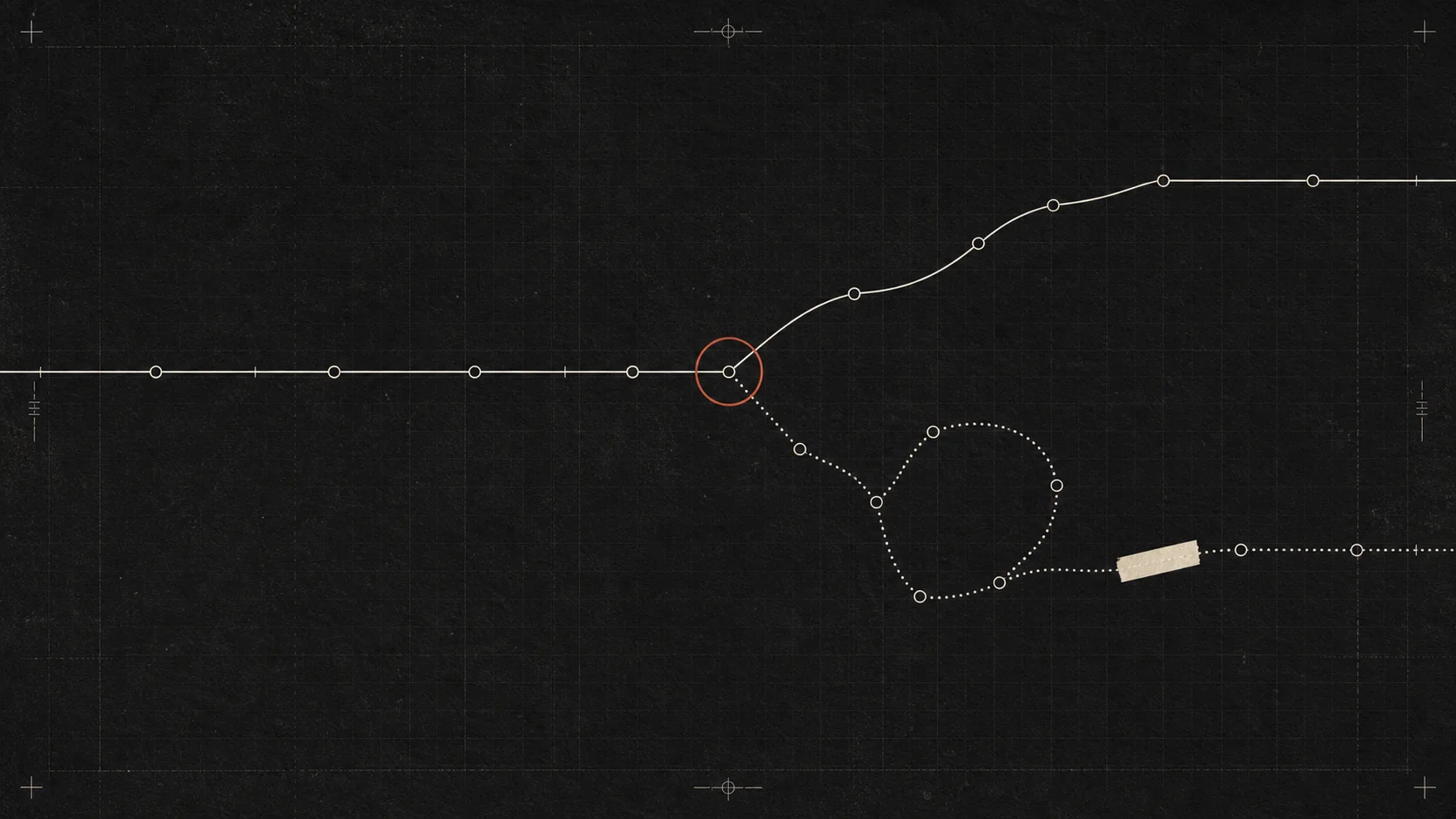
Langfuse is a broad LLM engineering platform. Kibitz concentrates on the point where an agent run becomes too long for a span tree to explain: reconstructing the route, locating causal decisions, and attaching evidence.
| Dimension | Langfuse | Kibitz |
|---|---|---|
| Primary object | Trace and observation | Decision in a request journey |
| Long-run navigation | Nested observations and timing | Request chapters, route map, backward loop arcs |
| Failure explanation | Scores, evaluators, metadata | Observed values → rule → causal step → alternative |
| Instrumentation | SDKs and OpenTelemetry | Python, TypeScript, OTLP/HTTP JSON, direct Run API |
| Code agents | Instrument the runtime | Post-run and live-watch import for Claude Code and Codex |
| Migration | Export/API | observations_v2 JSON, JSONL, and API response importer |
| Evaluation | Managed evaluation workflows | Deterministic evidence, CLI-account or BYOK suggestions, human queues |
| Deployment | Full distributed platform | File-readable local mode or stateless replicas on shared storage |
- 01
Export
Use the Langfuse v4 observations_v2 JSON/JSONL export or save an Observations API response.
- 02
Import
kibitz-langfuse-import groups rows by traceId and preserves hierarchy, usage, model, session, user, tags, release, and environment.
- 03
Validate
Compare observation counts, token usage, duration, model metadata, and parent relationships before removing existing instrumentation.
Fit matters more than parity
- Choose Langfuse when you want one broad, mature LLM engineering suite.
- Choose Kibitz when long-running agent causality and local code-agent traces are the primary problem.
- Run both during migration; the importer is designed for coexistence rather than a flag day.
Compare on your own traces, not a feature checklist
Export observations_v2 from Langfuse, import them into Kibitz, and inspect the same run through both products.